How Do I Know When Screen Use Is Becoming a Problem? Five Signs to Look For (Especially for Children with ADHD)
This article is part three of a four-part series exploring children, ADHD, and technology—from understanding why screens can become so compelling to building healthier digital habits. If you’d like to explore the full conversation, I invite you to read the other articles in this series. You can find them in the Related Articles section at the bottom of this page.
"I don't actually know if screens are the problem," a parent said to me recently.
"I just know that something feels... different."
I thought that was such an honest way to describe what many parents are experiencing. Often it isn't the number of hours that worries them. It's the feeling that screens are beginning to take up more space than they used to. More space than family dinners. More space than bike rides. More space than hobbies. More space than sleep.
Parents don't usually come to me because their child loves gaming or enjoys YouTube. They come because they're beginning to wonder whether screens are quietly replacing parts of childhood that matter.
And that's a very different question.
Over the last two articles, we've explored why screens can become so compelling, especially for children with ADHD. We've talked about the needs screens often meet and why some children are naturally more vulnerable to getting stuck in digital environments.
The next question is the one most parents eventually ask. "How do I know when screen use is actually becoming a problem?"
It's a good question. And despite what many headlines might suggest, the answer isn't as simple as counting hours.
Looking Beyond the Clock
For a long time, most conversations about children's screen use centered around one question: How much is too much?
It's an understandable place to start. When we see our child spending hours on a device, it's natural to wonder whether we've crossed some invisible line.
One of the things researchers have increasingly recognized is that time alone doesn't tell us very much. Two children might each spend three hours gaming on a Saturday afternoon. One happily turns it off for dinner, sleeps well that night, spends Sunday at soccer, and chats with friends at school on Monday.
Another struggles every time it's time to stop, stays up far later than intended, loses interest in activities they once loved, and becomes increasingly distressed whenever they're offline.
The number of hours is exactly the same. The impact is not. That's why many child development experts now encourage parents to look beyond the clock and pay closer attention to how screens are affecting a child's overall wellbeing.
In other words, context matters.
That's something we've talked about throughout this series, and I think it's worth remembering here.
A child enjoying screens isn't automatically a problem. Children become deeply interested in all sorts of things. Books. Music. Art. Sport. Building elaborate Lego creations. Technology can provide many of those same opportunities for creativity, learning, problem-solving, and connection.
The question isn't whether your child loves screens. The question is whether screens are beginning to replace experiences that children need in order to grow.
Why This Matters Especially for Children with ADHD
One of the questions I hear most often sounds something like this: "I don't understand. My child can spend three hours building something incredible in Minecraft, but can't spend ten minutes on homework."
If you've ever wondered that yourself, you're certainly not alone.
It also highlights one of the biggest misunderstandings about ADHD. ADHD isn't simply about paying attention. It's about regulating attention.
Think about what happens when a child is playing a game. They solve a problem. They immediately know whether it worked. They earn points. Unlock something new. Level up. If one strategy doesn't work, they try another almost instantly. The feedback never really stops.
Now compare that with homework. A child might spend thirty minutes working through a maths assignment before anyone tells them whether they're on the right track. Imagine practising piano for weeks before hearing whether you're improving. Or trying to learn basketball without ever seeing the score.
It's not that homework has no rewards. It's that the rewards arrive much later.
For many children with ADHD, that difference matters. Research suggests that ADHD is associated with differences in executive functioning and reward processing, meaning tasks with immediate feedback, novelty, and visible progress can feel much easier to engage with than tasks where the reward is delayed.
Researchers have also found that children with ADHD may be more vulnerable to developing problematic patterns of digital media use—not because they lack willpower, but because these environments align so well with the way their brains respond to interest and reward.
That doesn't mean every child with ADHD will struggle with screens. And it certainly doesn't mean screens are bad. It simply reminds us that some children may experience a much stronger pull toward digital environments than others.
Understanding that changes the conversation.
Instead of asking, "Why won't my child stop?" we can begin asking, "What is my child finding here that they're struggling to find somewhere else?"
That single question often opens the door to much more helpful conversations. Not just about screens. But about our children.
So, How Do I Know When Screen Use Is Becoming a Problem
This is where I encourage parents to stop watching the clock for a moment...
...and start watching what is happening around the screen.
One of the things I've noticed over the years is that parents rarely become concerned because their child enjoys gaming. They become concerned because something else slowly begins to disappear. It usually happens gradually. Not overnight. Which is exactly why it's so easy to miss.
Here are five patterns I encourage families to pay attention to.
Five Signs to Look For
1. Sleep Starts Taking the Hit
One of the first places I encourage parents to look is sleep. Not because every late night is a problem. We've all stayed up later than we intended watching one more episode or scrolling a little longer than planned.
What I'm looking for is a pattern.
Is your child regularly staying up because they can't pull themselves away from a game, YouTube, or their phone? Are they exhausted in the morning? Have mornings become harder than they used to be? Do you notice they're more irritable, emotional, or overwhelmed after nights when they've been online late?
Sleep is one of the foundations of healthy development. It supports attention, learning, emotional regulation, memory, and mental health. When sleep consistently suffers because of screen use, it's often one of the earliest signs that the balance is beginning to shift.
For children with ADHD, this matters even more. Many are already working harder to regulate attention and emotions throughout the day. Losing sleep can make those challenges even greater.
2. Other Parts of Life Quietly Begin to Disappear
This is probably the sign I pay the closest attention to.
Parents rarely come into my office saying, "My child plays too many video games." Instead they say things like, "He used to love riding his bike." "She doesn't really want to see her friends anymore." "Family game night has just... stopped."
It's often subtle. One activity disappears. Then another. Then another. Until almost every free moment revolves around a screen. That's when I begin asking whether screens are still adding to a child's life—or whether they're starting to replace parts of it.
This doesn't mean children have to be busy every minute of the day. Downtime is healthy. Screens can absolutely be part of that downtime. The question is whether they're gradually crowding out the relationships, movement, creativity, and real-world experiences that children also need to thrive.
3. Every Transition Becomes a Battle
Let's be honest. Most children don't jump for joy when it's time to turn off something they're enjoying. That's completely normal. What concerns me is when nearly every transition away from a screen becomes a major struggle.
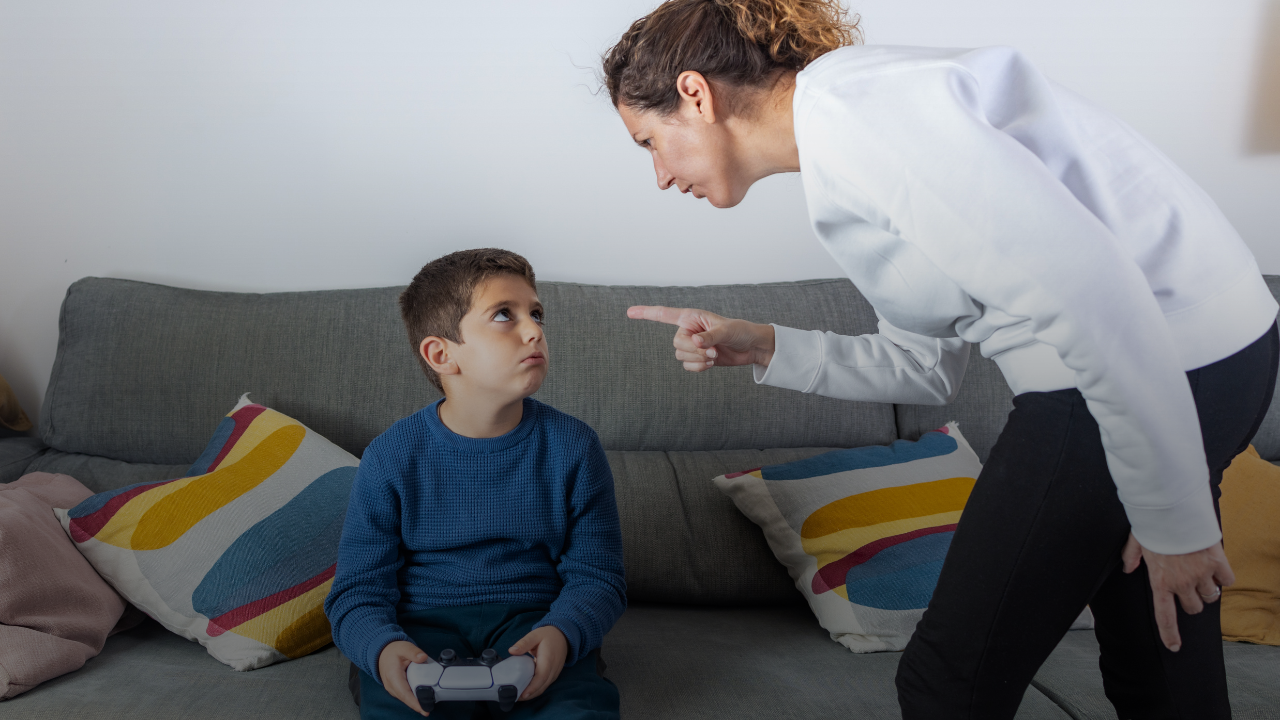
Perhaps you've given a ten-minute warning. Then a five-minute warning. You've stayed calm. You've been consistent, and yet almost every time it's time to stop, it ends in yelling, tears, bargaining, or complete shutdown.
For many children with ADHD, this isn't simply about refusing to listen. Transitioning from one activity to another is an executive functioning task. It requires shifting attention, tolerating disappointment, and moving from something that's highly rewarding to something that may feel much less interesting.
That doesn't mean we avoid setting limits. Children still need boundaries, but understanding why transitions are difficult helps us respond with support instead of assuming defiance.
Sometimes the question isn't, "How do I make my child stop arguing?" It's, "How do I help my child make the transition more successfully?"
4. Screens Become the Only Reliable Way to Feel Better
Screens can absolutely help us unwind. I don't think that's something we need to apologize for. After a difficult day, many of us watch a favorite show, play a game, or scroll for a while to help our brains switch gears.
Children aren't any different.
The concern isn't that screens help. The concern is when they're the only thing that helps. When every experience of boredom, frustration, loneliness, anxiety, disappointment, or stress leads immediately to a screen, it may be a sign that a child needs more ways to regulate and recover.
One of the phrases I often use with parents is this: Children don't usually need less screen time. They need more reasons to want to leave the screen.
Sometimes those reasons are relationships. Sometimes they're activities where a child feels genuinely competent. Sometimes they're opportunities to move, create, laugh, or simply spend time with people who make them feel understood.
The goal isn't to take away something that helps. It's to make sure it isn't the only thing that helps.
5. Screens Become the Center of Family Life
The final sign has less to do with the child and more to do with what is happening around the child.
What do conversations about screens sound like in your home? Has nearly every evening become a negotiation? Do reminders turn into arguments? Are family relationships beginning to revolve around devices?
Sometimes parents tell me, "I feel like all I do is police screens."
That's exhausting. For everyone.
When screens become the source of constant conflict, it's usually worth becoming curious rather than simply becoming stricter. Repeated battles often tell us that something deeper is happening.
The goal isn't to win more arguments. The goal is to understand why those arguments have become necessary in the first place.
Looking at the Bigger Picture
If you're reading this and recognizing your own child, I hope one thing is clear. This article isn't about labelling children. It's about helping us notice patterns before they become bigger problems.
Every child stays up too late sometimes. Every child argues about turning off something they enjoy. Every child goes through phases where one interest takes centre stage.
None of those things, on their own, tell us very much. What matters is the overall pattern. Is your child's world continuing to grow? Or is it gradually becoming smaller?
That question tells us far more than any screen-time calculator ever could.
A Final Thought
One of the things I hope parents take away from this conversation is that enjoying screens is not the problem. The problem is when screens quietly begin replacing the experiences children need to grow. That doesn't happen overnight. And it doesn't happen because children are lazy, unmotivated, or simply choosing screens over family. More often, it's because screens are meeting real needs that haven't yet found another place to be met.
That's why our goal isn't simply less screen time. It's helping children build lives that are rich enough, connected enough, and meaningful enough that screens become one enjoyable part of a much bigger world.
Children don't usually need less screen time. They need more reasons to want to leave the screen. I think that's where the most meaningful change begins.
In the next article, we'll shift from recognizing the signs to talking about what we can do to help. We'll explore practical ways to build a healthier relationship with screens without relying only on stricter rules or taking devices away.
Be well,
Judy Richardson-Mahre, MA ADHD-CCSP
Licensed Marriage & Family Therapist
ADHD Expert & Coach
Parent Coach Educator
612.930.3903
Related Articles
Part 2: It's Not About Willpower: Why Some Children Are More Vulnerable to Problematic Screen Use
Spill the Tea on ADHD: Education for Helping Professionals and Parents
Learn practical, evidence-based strategies to better understand ADHD and support the individuals in your care, classroom, or home.
About the Author